Luxury Home Design Trends Shaping Austin in 2026
Luxury real estate in Austin has evolved well beyond oversized floor plans and expensive finishes. In 2026, buyers at the higher end of the market are looking for homes that combine sophisticated design with functionality, technology, energy efficiency, wellness, and a strong connection to the outdoors.
Austin’s luxury market reflects the city’s broader evolution. The region continues attracting technology professionals, entrepreneurs, executives, investors, and relocating buyers who expect their homes to function as more than a place to live. A luxury property increasingly needs to accommodate remote work, entertaining, wellness, privacy, technology, and outdoor living while still feeling distinctly Austin.
This shift is also influencing new construction and renovations throughout the metro. Buyers are becoming more selective about what qualifies as luxury, and builders are responding by emphasizing thoughtful architecture, high-performance systems, flexible spaces, and amenities that enhance everyday living.
For homeowners considering a luxury purchase, renovation, or sale in 2026, understanding these design trends can provide valuable insight into what today’s buyers are actually looking for.
Luxury Is Becoming More About Function Than Size
One of the most important changes in luxury home design is the move away from simply building bigger.
Large homes remain desirable, but buyers increasingly want every square foot to serve a purpose. Instead of oversized rooms that are rarely used, luxury homeowners are prioritizing spaces that support the way they actually live.
A modern luxury home may include a dedicated home office, wellness room, private media space, outdoor kitchen, guest suite, or flexible room that can change functions over time.
This reflects a broader shift in buyer expectations. Luxury is increasingly measured by convenience, privacy, customization, and quality rather than square footage alone.
Indoor-Outdoor Living Remains Central to Austin Design
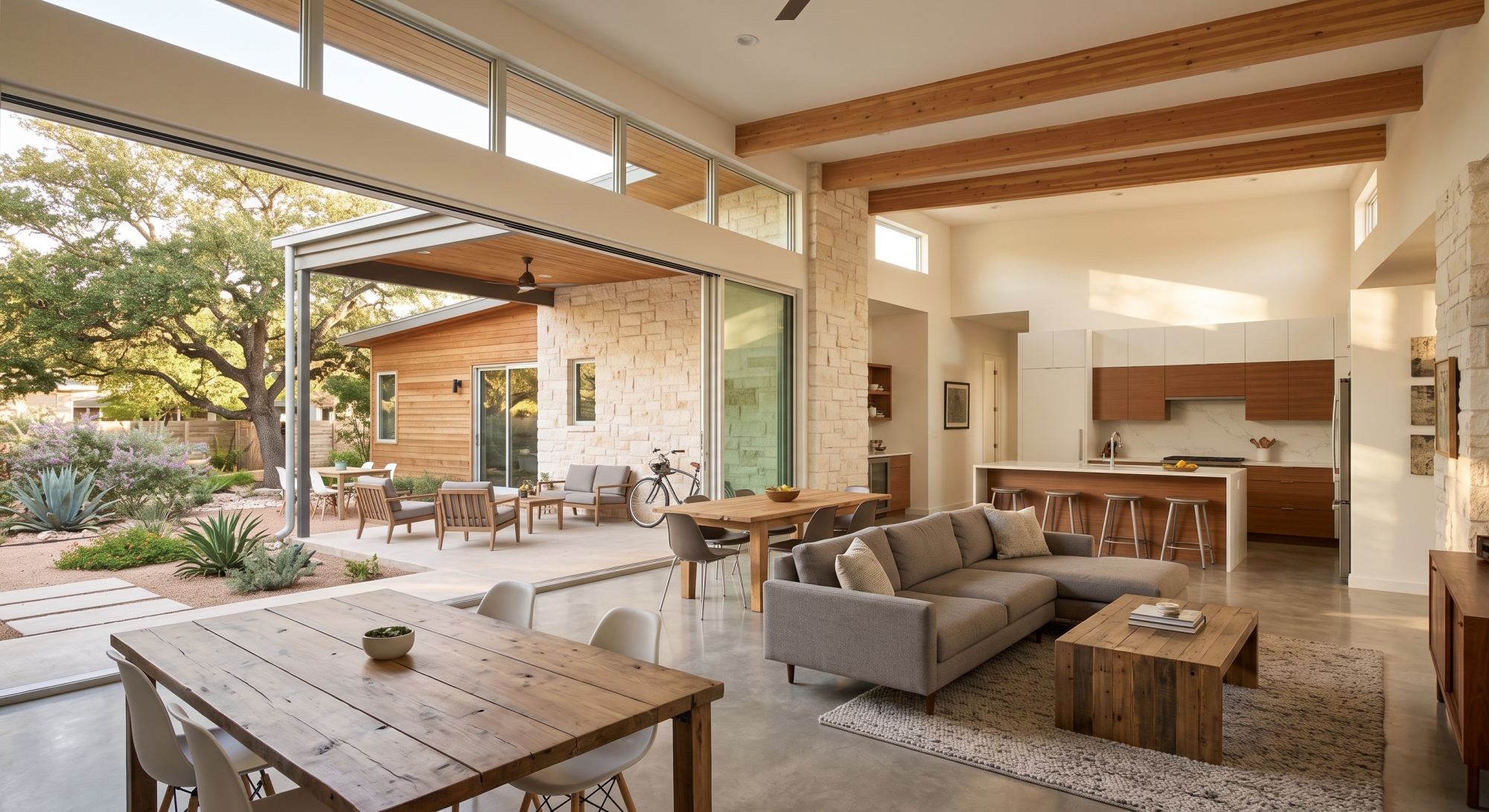
Austin’s climate and outdoor-oriented culture continue making indoor-outdoor living one of the strongest luxury design trends in 2026.
High-end homes are increasingly designed to create a seamless connection between interior and exterior spaces. Large sliding glass doors, covered patios, outdoor kitchens, fireplaces, pools, landscaped courtyards, and shaded entertaining areas allow homeowners to use their outdoor spaces throughout much of the year.
The best designs treat outdoor areas as extensions of the home’s living space rather than secondary features.
For luxury buyers, an outdoor kitchen or covered entertaining area can be just as important as an upgraded interior kitchen. In many Austin neighborhoods, a well-designed backyard has become a major part of the home’s overall value proposition.
Wellness Spaces Are Becoming Standard Luxury Features
Wellness has become an increasingly important component of high-end residential design.
Luxury buyers are incorporating dedicated spaces for relaxation, exercise, and personal wellness rather than relying solely on traditional bedrooms and living areas.
Depending on the property, these features may include private gyms, yoga studios, saunas, steam showers, spa-inspired bathrooms, meditation spaces, and recovery areas.
Primary bathrooms are also becoming more experiential, with oversized showers, freestanding tubs, natural materials, layered lighting, and improved privacy.
The goal is to create a home environment that supports physical and mental well-being without requiring residents to leave the property.
Home Offices Are Becoming More Sophisticated
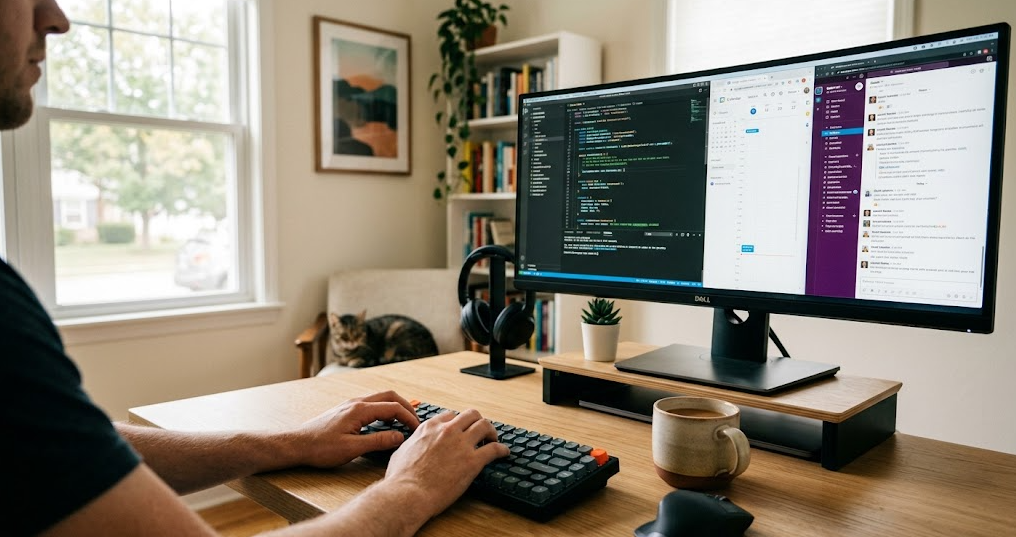
The continued prevalence of remote and hybrid work has permanently changed expectations for luxury homes.
A small desk tucked into a bedroom is no longer enough for many high-income buyers. Instead, buyers are looking for dedicated office environments that provide privacy, professional presentation, and comfortable long-term use.
Luxury home offices may include built-in cabinetry, custom millwork, acoustic treatments, high-speed connectivity, multiple workstations, private entrances, and integrated technology.
Some properties are also incorporating multiple offices, allowing two household members to work simultaneously without competing for the same space.
For Austin’s technology-heavy workforce, these features can be particularly valuable.
Smart Home Technology Is Becoming More Integrated
Technology has become a defining feature of modern luxury housing, but the trend is moving toward integration rather than simply adding more devices.
Today’s buyers increasingly want systems that work together seamlessly.
Luxury homes may incorporate centralized controls for lighting, climate, security, shades, audio, entertainment, and access systems. Smart technology can also improve energy management and provide homeowners with greater control over how their properties operate.
The strongest designs make technology nearly invisible. Instead of rooms filled with screens and devices, systems are integrated into the architecture and controlled intuitively.
This creates a more sophisticated environment while preserving the clean aesthetic today’s luxury buyers often prefer.
Energy Efficiency Is Becoming Part of Luxury
Energy efficiency is increasingly being viewed as a premium feature rather than simply an environmental consideration.
Austin’s hot summers make HVAC performance, insulation, windows, and building envelope design particularly important.
Luxury buyers are increasingly interested in:
- High-performance insulation
- Efficient HVAC systems
- Energy-efficient windows
- Solar-ready infrastructure
- Smart thermostats
- Energy monitoring systems
- Electric vehicle charging
These features can improve comfort while potentially reducing operating costs.
For buyers evaluating a luxury property, efficiency should therefore be considered alongside finishes, appliances, and architectural design.
A beautiful home that is expensive and inefficient to operate may not provide the same long-term value as a similarly priced property designed for high performance.
Natural Materials Are Replacing Overly Ornate Finishes
Luxury design in 2026 is increasingly centered on understated sophistication.
Instead of relying heavily on ornate details or excessive decorative elements, designers are using natural materials, texture, craftsmanship, and proportion to create a sense of quality.
Stone, wood, plaster, natural textiles, and other organic materials can create a warm and timeless environment.
This approach works particularly well in Austin because it complements the region’s Hill Country influences while still allowing homes to maintain a modern architectural identity.
The result is a form of luxury that feels refined without becoming overly formal.
Kitchens Are Becoming High-Performance Spaces
The luxury kitchen continues to serve as one of the most important rooms in the home, but expectations have expanded beyond visual appeal.
Today’s buyers increasingly want kitchens that function as professional-grade workspaces and social environments.
Features may include high-end appliances, oversized islands, custom cabinetry, hidden storage, secondary prep kitchens, wine storage, and integrated beverage stations.
But the trend goes beyond appliances. Buyers are also looking for kitchens that connect naturally to dining, living, and outdoor entertaining areas.
In luxury homes, the kitchen has effectively become a central command center for daily life and entertaining.
Private Guest and Multigenerational Spaces Are Growing
Flexibility has become increasingly valuable in luxury home design.
Homes are being designed to accommodate guests, aging parents, adult children, caregivers, and extended family members without sacrificing privacy.
Private guest suites with separate entrances, dedicated bathrooms, sitting areas, and small kitchenettes can provide significant flexibility.
This type of design can also improve long-term usability. A room that functions as a guest suite today could become a private space for family members or caregivers in the future.
For buyers thinking beyond immediate needs, flexible residential design can provide meaningful long-term value.
Privacy Is Becoming a Luxury Amenity
As Austin continues to grow, privacy itself is becoming increasingly valuable.
Luxury buyers are looking for properties that provide separation from neighboring homes, streets, and surrounding development.
Architectural strategies may include:
- Gated entrances
- Private courtyards
- Strategic landscaping
- Privacy walls
- Controlled sightlines
- Large setbacks
- Outdoor screening
Privacy is particularly important in luxury markets where buyers are willing to pay a premium for a sense of exclusivity.
In some cases, the land surrounding the home can be just as important as the house itself.
Flexible Entertainment Spaces Are Replacing Formal Rooms
Formal living rooms and rarely used dining rooms are increasingly being replaced with flexible entertainment spaces.
Luxury homeowners want spaces that can accommodate multiple purposes, from casual family gatherings to larger events.
Media rooms, game rooms, wine lounges, outdoor entertaining areas, and flexible gathering spaces are becoming increasingly common.
This reflects a larger shift in residential design: rooms are being designed around experiences rather than labels.
A luxury home is expected to adapt to the homeowner instead of forcing the homeowner to adapt to the floor plan.
Design That Reflects Austin’s Identity
Despite the influence of national luxury design trends, Austin buyers continue to value properties that feel connected to the region.
Hill Country materials, natural landscaping, expansive windows, outdoor gathering spaces, and modern interpretations of Texas architecture remain popular.
The strongest luxury properties often combine contemporary design with elements that feel appropriate to their setting.
This regional identity can also contribute to resale appeal. Buyers relocating to Austin are often looking for a home that provides not only luxury but also a sense of place.
What These Trends Mean for Luxury Home Sellers
For homeowners preparing to sell a luxury property in 2026, understanding current design expectations can be just as important as pricing correctly.
Not every trend requires a major renovation. In many cases, thoughtful presentation, updated lighting, simplified interiors, improved outdoor spaces, and strategic staging can help a property feel more current.
The luxury staging materials used by True North Group emphasize the importance of removing personal items, simplifying rooms, organizing storage, and clearing countertops so buyers can better visualize themselves in the space.
Cleanliness also plays an important role in how luxury properties are perceived. Professional cleaning, polished fixtures, spotless appliances, and attention to details such as cabinets, vents, and surfaces can materially improve how a home presents in photography and showings.
For sellers, the goal is not necessarily to incorporate every new design trend. The objective is to highlight the property’s strongest features and ensure the presentation feels current, sophisticated, and intentional.
What Buyers Should Prioritize in 2026
Luxury buyers should look beyond finishes when evaluating a property.
A visually impressive home may still have outdated mechanical systems, inefficient HVAC equipment, poor insulation, or expensive maintenance requirements.
Buyers should evaluate the entire property, including construction quality, energy performance, technology infrastructure, outdoor spaces, privacy, and long-term maintenance.
This is particularly important in Austin’s climate. HVAC performance and maintenance history deserve careful attention because cooling systems operate under significant seasonal demand. A recent Austin home inspection, for example, highlights the importance of evaluating HVAC age, maintenance history, temperature differentials, and system condition rather than assuming newer-looking equipment is automatically high-performing.
In other words, luxury should be evaluated by performance as well as appearance.
The Future of Luxury Home Design in Austin
Austin’s luxury housing market is becoming increasingly sophisticated. Buyers are demanding homes that provide beautiful design while also delivering functionality, efficiency, wellness, technology, and privacy.
The strongest luxury properties of 2026 are not necessarily the largest or most expensive. They are the homes where architecture, technology, materials, landscaping, and lifestyle work together seamlessly.
As Austin continues attracting high-income professionals and relocating buyers, these expectations will likely continue influencing both new construction and renovations throughout the market.
The definition of luxury is changing from “more” to “better.”
Final Thoughts
Luxury home design in Austin is entering a more thoughtful and experience-driven era. Indoor-outdoor living, wellness spaces, sophisticated home offices, integrated smart technology, energy efficiency, natural materials, flexible entertaining areas, and privacy are becoming increasingly important to today’s high-end buyers.
For homeowners, these trends provide an opportunity to improve both everyday livability and long-term market appeal. For buyers, they provide a useful framework for distinguishing genuine luxury from expensive finishes that may have limited practical value.
In 2026, the most compelling luxury homes are those that combine Austin’s distinctive lifestyle with thoughtful architecture and modern performance.
Find a Luxury Home That Fits the Way You Live
Buying or selling a luxury property requires a different level of strategy. The right home is not simply the one with the most expensive finishes—it is the property that best combines location, architecture, functionality, privacy, technology, and long-term value.
At True North Group, we help buyers and sellers navigate Austin’s luxury market with a strategic approach focused on both lifestyle and investment considerations.
If you’re considering buying, selling, or upgrading to a luxury home in Austin in 2026, contact True North Group today. Let us help you identify the properties and opportunities that align with the way you want to live and the value you want to create.