Austin’s housing market has entered a more disciplined phase. After years of rapid appreciation, bidding wars, and national attention, the market has stabilized into a more sustainable rhythm. Inventory is more balanced than during peak pandemic years, price growth has moderated, and both renters and buyers are approaching decisions with greater caution. Yet even within this stabilization, demand remains structurally supported by continued economic expansion and population migration into the region.
Amid this evolving landscape, one housing model has expanded at a remarkable pace: build-to-rent (BTR) communities. These purpose-built single-family rental neighborhoods are reshaping how housing is delivered in suburban Austin. They are not merely a response to short-term market conditions; they reflect deeper economic and demographic shifts that are likely to influence the metro’s housing ecosystem for years to come.
What Defines a Build-to-Rent Community?
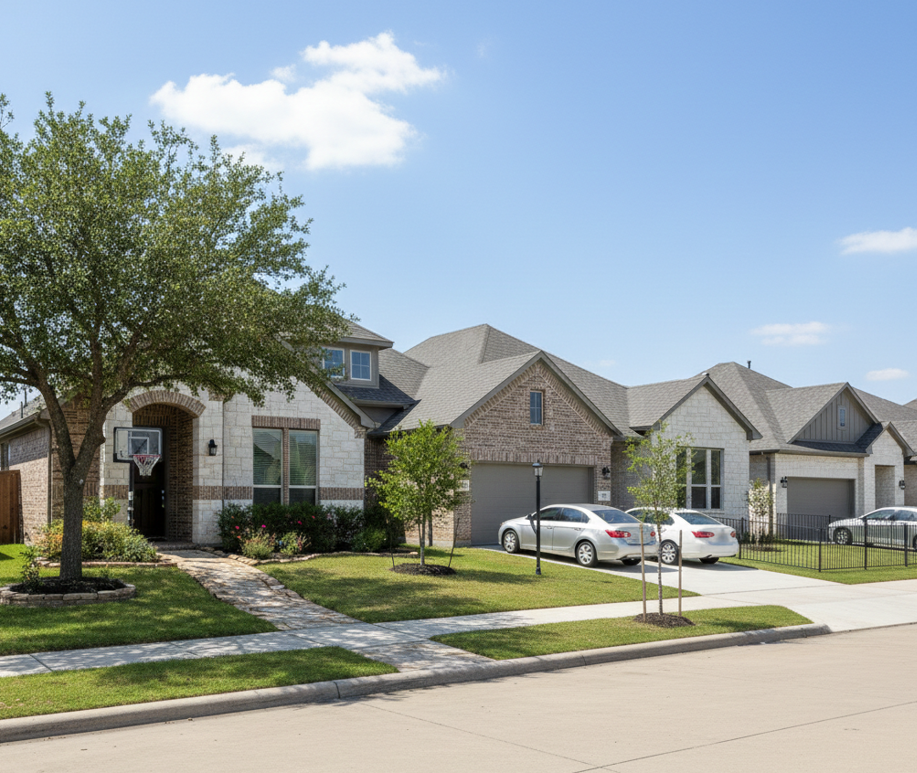
A build-to-rent community is a residential development consisting of detached or semi-detached single-family homes constructed specifically for long-term rental. Unlike traditional subdivisions where homes are sold individually to owner-occupants, BTR communities are typically held under unified ownership by institutional investors or development firms. Residents lease homes much like they would apartments, but they live in properties that resemble entry-level or move-up suburban homes.
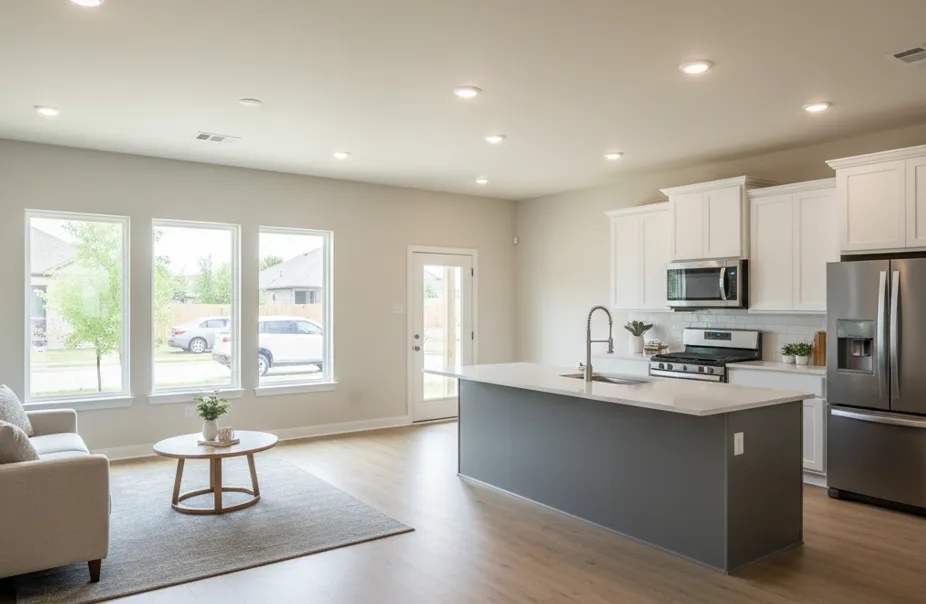
These neighborhoods often include private yards, attached garages, modern interior finishes, and access to shared amenities such as pools, clubhouses, walking trails, and pet facilities. On-site management teams handle maintenance, landscaping, and repairs, creating an operational structure that mirrors multifamily housing but within a horizontal residential environment.
The appeal lies in combining the space and privacy of homeownership with the flexibility and reduced responsibility of renting. This hybrid model has proven particularly attractive in high-growth metros like Austin.
The Economic Forces Driving BTR Expansion in Austin
The rise of build-to-rent communities in Austin is rooted in several interconnected economic forces.
First, affordability constraints continue to influence household decisions. While home price acceleration has moderated compared to peak pandemic conditions, overall housing costs remain elevated relative to historical norms. Mortgage rates, property taxes, insurance premiums, and maintenance costs create substantial monthly ownership obligations. Texas’ reliance on property taxes to fund public services, including education, adds another layer of financial exposure for homeowners.
For households unable or unwilling to absorb those costs, BTR communities offer access to detached living without long-term capital commitment. Renters avoid direct property tax volatility and major repair expenses, trading equity accumulation for financial predictability.
Second, migration and employment growth continue to drive housing demand. Austin remains a magnet for technology firms, startups, and corporate relocations. New residents often prefer to rent before committing to purchase, particularly when relocating from out of state. Build-to-rent communities provide immediate suburban housing options for families who want more space than urban apartments provide.
Third, institutional capital has increasingly targeted single-family rental portfolios. In a market where appreciation rates have normalized, recurring rental income offers investors a more predictable return profile. Large-scale BTR projects allow institutional operators to scale holdings efficiently while responding to sustained regional demand.
Geographic Concentration and Development Corridors
Build-to-rent developments are not evenly distributed across Austin. They are concentrated primarily in suburban growth corridors where land supply and infrastructure expansion support horizontal development.
Northern suburbs, eastern expansion zones, and southeastern corridors have seen particularly strong BTR activity. These areas align with ongoing infrastructure investments, school construction, retail development, and employment expansion. Developers strategically position projects near major highways and commuter routes to attract professionals working in urban employment centers.
As Austin’s urban core becomes denser and increasingly vertical, suburban BTR communities provide an alternative that maintains yard space and neighborhood-style living without requiring ownership.
Impact on For-Sale Housing Inventory
The growth of build-to-rent communities influences the broader housing supply landscape in meaningful ways.
Because BTR homes are retained under centralized ownership, they remove potential inventory from the traditional resale market. In price tiers where first-time buyers typically seek detached homes, this can reduce available supply and intensify competition for existing listings.
In certain suburban corridors, the presence of large-scale BTR developments may contribute to tighter entry-level inventory. At the same time, expanded single-family rental supply diversifies options for households not ready to purchase, potentially easing pressure on multifamily apartment markets.
This dynamic reshapes suburban housing composition, blending rental-driven neighborhoods alongside owner-occupied subdivisions.
The Financial Comparison: Renting vs. Owning in 2026
The decision between renting in a build-to-rent community and purchasing a home has become more nuanced in Austin’s stabilized 2026 environment.
Homeownership offers equity accumulation and long-term appreciation potential. However, it also exposes households to property taxes, insurance volatility, repair expenses, and market fluctuations. Maintenance and capital improvement costs add variability to monthly budgeting.
Build-to-rent residents avoid many of these variables. Maintenance is typically included, property tax increases do not directly affect tenants, and lease terms provide mobility. However, renters do not benefit from appreciation, and rent increases remain possible at renewal.
For households prioritizing flexibility or financial conservatism during uncertain economic periods, BTR living may represent a strategic interim solution. For those seeking long-term wealth accumulation, ownership continues to offer advantages, but with greater exposure to cost variability.
School District and Community Alignment
School district alignment remains a significant factor in suburban housing demand. Build-to-rent developers often select sites within growing or well-regarded school districts to enhance appeal among families.
Relocating households with children frequently evaluate school boundaries before selecting rental housing. As Austin continues to grow, districts experiencing expansion and campus modernization may reinforce demand for nearby BTR communities.
However, renters in these communities do not capture long-term value appreciation tied to school-driven demand concentration, a benefit reserved for homeowners.
Long-Term Market Implications
Build-to-rent communities represent a structural evolution rather than a temporary development trend. Their expansion signals several long-term implications for Austin’s housing ecosystem.
Institutional ownership of single-family housing is increasing. Rental inventory diversification is expanding. Entry-level ownership pathways may shift further outward geographically as detached inventory becomes segmented between for-sale and rental-only supply.
Austin’s sustained population growth suggests continued rental demand across multiple housing types. As appreciation moderates, income-driven housing models may remain attractive to investors seeking stability.
The durability of the BTR segment will depend on location quality, management efficiency, tenant retention, and infrastructure alignment.
Risks and Considerations
Despite its advantages, build-to-rent housing is not without risk. Oversupply in particular corridors could pressure rental pricing. Institutional operators may adjust rents dynamically in response to occupancy shifts.
Large concentrations of rental-only housing may also influence neighborhood perception and long-term community cohesion. Additionally, regulatory or zoning changes could affect future development pipelines.
Residents must evaluate lease flexibility, potential rent increases, and lifestyle restrictions imposed by centralized management structures.
From a macro perspective, increasing institutional participation in single-family housing raises broader policy discussions regarding ownership accessibility and market balance.
The Broader Housing Ecosystem
Austin’s housing landscape in 2026 is increasingly segmented. Urban high-rise apartments serve downtown professionals. Traditional subdivisions accommodate long-term homeowners. Luxury infill targets high-income buyers. Build-to-rent communities occupy a hybrid middle ground.
This segmentation reflects evolving consumer preferences. Some households value mobility over equity. Others prioritize stability and ownership. BTR communities serve those seeking space and flexibility without permanent financial commitment.
Rather than replacing homeownership, build-to-rent fills a structural gap created by affordability pressures and migration dynamics.
Final Thoughts
The rise of build-to-rent communities in Austin represents a structural transformation in suburban housing delivery. It reflects the intersection of affordability realities, demographic shifts, and institutional capital deployment.
For renters, it offers space and maintenance-free living. For buyers, it influences inventory availability and pricing dynamics. For investors, it provides scalable income exposure tied to one of the nation’s most dynamic metropolitan economies.
As Austin continues to evolve, understanding how build-to-rent communities interact with ownership markets, school alignment, tax exposure, and growth corridors is essential for strategic decision-making.
Work With a Team That Understands Structural Market Shifts
Navigating Austin’s changing housing environment requires clarity about how emerging models affect pricing, rental demand, and long-term value positioning.
At True North Group, we help clients evaluate growth corridor data, stabilized market conditions, and ownership cost exposure, including property tax implications, so they can determine whether renting, buying, or investing aligns best with their financial strategy.
If you are considering a move within Austin’s evolving housing landscape, schedule a personalized consultation with our team. In a market defined by structural shifts, informed planning is your strongest advantage.