New Braunfels continues to sit at the center of one of Texas’ most dynamic growth corridors. Positioned between Austin and San Antonio, the city benefits from steady population migration, job expansion, and ongoing residential development. In 2026, as this growth persists, one factor consistently stands out as a primary driver of property value: school district alignment.
School boundaries in New Braunfels do more than determine where children attend class. They influence buyer demand, pricing stability, resale liquidity, property taxes, and long-term appreciation patterns. For families, investors, and even buyers without school-aged children, understanding how education infrastructure shapes real estate performance is essential.
The School District Landscape in New Braunfels
New Braunfels is primarily served by two public school systems: New Braunfels ISD (NBISD) and Comal ISD. While both operate within the same city, their geographic coverage differs significantly, and those boundary lines often define real estate pricing tiers.
NBISD generally serves central and eastern areas of the city, including more established neighborhoods and sections closer to historic downtown. These neighborhoods often benefit from proximity to amenities, retail, and established infrastructure.
Comal ISD serves much of the northern and western growth corridors, including several newer master-planned communities. As development expands outward in response to sustained migration, Comal ISD boundaries increasingly overlap with new construction inventory.
The difference between these districts is not simply geographic. Buyer perception, campus facilities, enrollment growth, and long-term planning all contribute to how each district influences property value.
Buyer Demand and Pricing Pressure
In 2026, families relocating to New Braunfels frequently prioritize school alignment before selecting a neighborhood. When buyer demand concentrates within specific attendance zones, pricing pressure follows.
Limited housing supply within preferred zones can lead to competitive offer scenarios, even in a broader market that has moderated compared to pandemic peaks. Homes aligned with highly regarded campuses often sell faster and at stronger price points than similar homes outside those boundaries.
This concentration effect compounds over time. As resale buyers continue prioritizing the same districts, neighborhoods within those zones may experience more consistent appreciation cycles.
Resale Liquidity and Long-Term Stability
School alignment does not only matter to households with children. It plays a crucial role in resale liquidity.
A property zoned to a desirable school typically attracts a broader pool of potential buyers. That broader demand base reduces time on market and may provide insulation during economic slowdowns. In a 2026 market defined by stabilization rather than rapid acceleration, liquidity becomes increasingly important.
Conversely, homes located near district boundary lines or within less sought-after zones may face narrower buyer interest, even if the property itself is comparable in size and condition.
Property Taxes and School Funding Structure
Texas funds public education primarily through property taxes. In most residential tax bills, the school district portion represents the largest share of the annual obligation.
This structure introduces a critical financial layer to school alignment. Buyers comparing homes across NBISD and Comal ISD boundaries may encounter different effective tax rates. Two homes with identical purchase prices can carry different annual tax burdens depending on district levies and overlapping taxing entities.
Higher-performing or rapidly growing districts do not automatically equate to lower taxes. Bond measures, facility expansions, and infrastructure investments can influence tax rates. Homestead exemptions reduce taxable value for owner-occupants, but they do not eliminate differences between districts.
Long-term ownership cost projections must include realistic post-purchase tax modeling.
New Construction and Growth Corridors
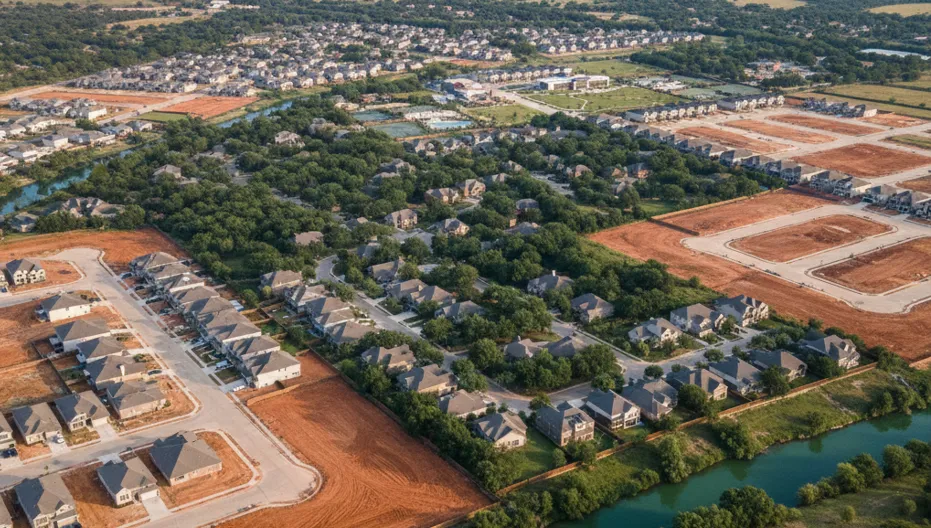
New Braunfels continues to see substantial new development in 2026, particularly in northern and western corridors. Many of these developments fall within Comal ISD.
Builders often highlight school alignment in marketing materials, recognizing that educational reputation influences buyer decisions. However, new construction listings frequently display incomplete tax data prior to full property assessment.
Once improvements are assessed, taxable value typically increases. Buyers who rely on pre-construction tax estimates may underestimate monthly carrying costs.
Growth-driven campus construction can also create localized price adjustments. New school openings often reinforce neighborhood desirability, particularly in master-planned communities.
Boundary Lines and Micro-Market Differences
School boundaries can create micro-market pricing differences within the same subdivision.
Two homes located on adjacent streets may feed into different campuses due to enrollment balancing. Districts periodically adjust attendance zones to manage capacity as growth continues. Buyers must confirm campus assignments directly rather than relying solely on listing descriptions.
Over time, these subtle boundary differences can result in measurable price variation. In competitive districts, even slight zoning distinctions may influence buyer decision-making.
Rental and Investment Implications
School alignment affects rental performance as well.
Long-term family rentals often perform better in neighborhoods aligned with reputable districts. Tenant stability increases when families plan multi-year stays tied to school enrollment continuity.
Even corporate relocation tenants evaluate school districts before signing leases. While interest rates and broader market moderation influence investment underwriting, school positioning can improve occupancy consistency and reduce turnover risk.
The 2026 Growth Outlook
New Braunfels remains positioned within a high-growth regional corridor supported by employment expansion and migration trends. As development continues, school infrastructure will remain central to neighborhood planning.
Bond measures, campus expansions, and facility modernization projects signal long-term district confidence. Areas aligned with stable or expanding districts may continue to experience sustained demand.
Buyers who evaluate school alignment as part of a forward-looking strategy rather than reacting to current rankings alone are better positioned for durable value retention.
What Buyers Should Evaluate Beyond Rankings
While ratings and rankings provide useful reference points, deeper analysis is necessary.
Buyers should consider enrollment trends, planned rezoning proposals, district financial health, campus modernization efforts, transportation routes, and community engagement levels. School reputation evolves over time. Districts investing in infrastructure and adapting to growth often strengthen their long-term standing.
Real estate value is influenced not only by present perception but also by district trajectory.
Final Perspective
In 2026, New Braunfels schools remain one of the most powerful influences on real estate value. District boundaries shape buyer demand concentration, resale liquidity, tax exposure, rental stability, and long-term appreciation patterns.
As the regional market continues to mature and stabilize, disciplined analysis becomes increasingly important. Buyers must integrate school alignment with tax modeling and corridor-level growth assessment.
School positioning is not simply an educational preference — it is a structural financial variable that compounds over time.
Work With a Team That Understands the Full Picture
School district alignment should never be an afterthought in your real estate strategy. It influences not just where you live today, but how your investment performs years from now.
At True North Group, we help buyers and sellers analyze district boundaries, model effective property tax exposure, and evaluate corridor-level growth trends to ensure every decision is grounded in data — not assumption.
If you are considering buying or selling in New Braunfels in 2026, schedule a personalized consultation with our team. We will help you compare neighborhoods, project long-term costs, and align your real estate move with both your family’s needs and your financial objectives.
A well-informed decision today can create measurable value for years to come.